Selling new equipment to existing customers is one of the toughest nuts to crack in manufacturing sales. The machine still runs, orders are still getting done — why should they shell out hundreds of thousands, or even millions, to replace it? When a customer asks this question, there's a default assumption at play: the old equipment still works, and the new one's functional improvements simply don't justify the price.
The old equipment is indeed still producing, but they haven't calculated how much lower its overall efficiency is compared to a new one. It still turns, but they haven't accounted for how severe its failure rate and maintenance costs have become. It's still usable, but they haven't worked out how much its energy consumption and scrap rate are already eating into their profits. The numbers can be worked out on paper, but the customer doesn't feel them. That's where the "Old vs. New Equipment Comparison" animation is becoming a powerful way to get clients to accept new equipment in a second — by turning the real differences behind the numbers into visuals they can grasp instantly.
The Problems of Old Equipment Are Known but Not Felt; the Advantages of New Equipment Are Heard but Not Truly Understood
The reason a customer doesn't replace old equipment is often not that they are unaware of the problems, but that they lack a concrete sense of how serious those problems really are. They know the old machine sometimes breaks down, but "sometimes" feels like a low-frequency event in their mind. What they don't realize is just how many hours of downtime that "sometimes" has already piled up into. They know the scrap rate is a bit higher than that of a new machine, but they haven't translated that "a bit higher" into annual profit losses.
At the same time, they suffer from the same perception gap when it comes to the new equipment's advantages. When a salesperson tells them "the new equipment boosts efficiency by 30%," all they hear is a number. They won't automatically translate that number into "a few extra days of production capacity each month" or "how much scrap loss will be eliminated each year." Bridging the gap between a number and real-world benefits requires a mental calculation — and they usually don't bother to do it, or simply can't figure it out clearly.
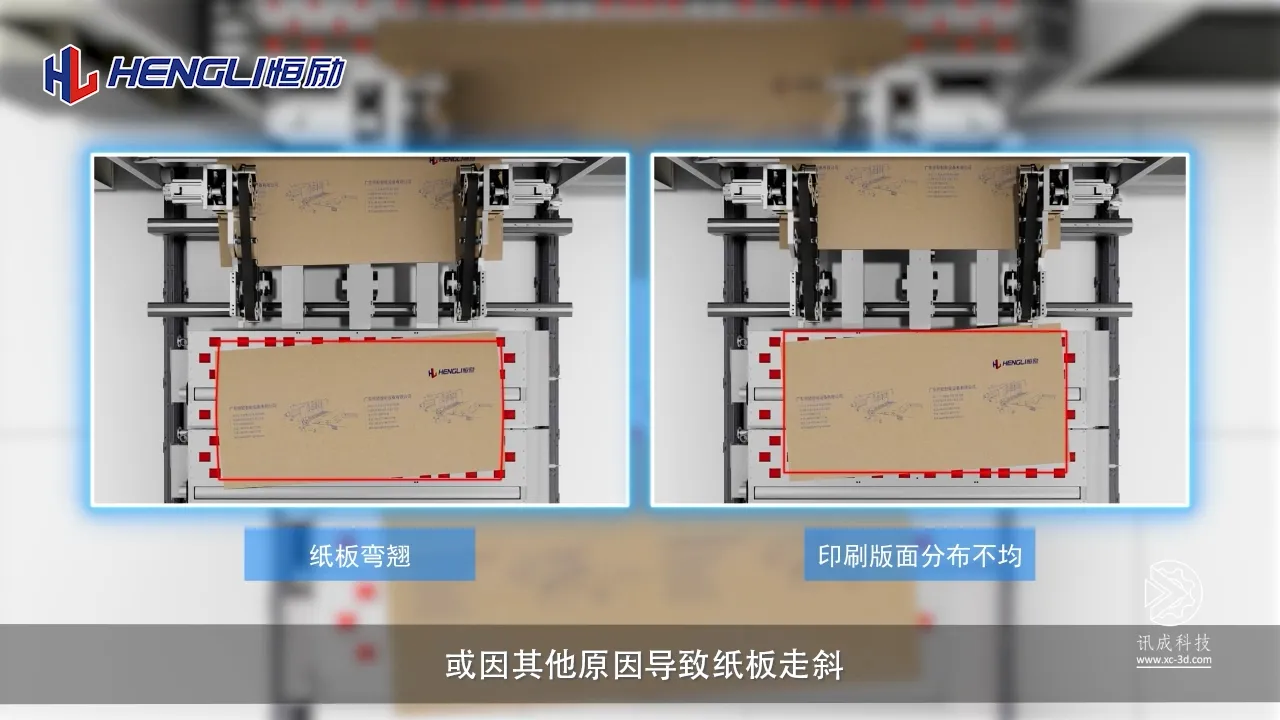
When Guangdong Hengli Intelligent Equipment Co., Ltd. was promoting its leading-edge crush-free sheet feeder, it faced this exact perception gap. Customers had been using traditional rubber roller feeders for years, thinking "as long as it works, it's good enough." Hengli used an old-vs-new comparison animation to display the feeding processes side by side: a red reference frame overlaid on the cardboard, with the traditional solution showing board misalignment and crushed flutes, juxtaposed against the crush-free solution showing the board passing through smoothly.
What the customer sees is the performance gap between the two solutions under identical operating conditions — the distance of board misalignment, the severity of flute crushing, the speed of throughput. The actual real-world performance behind all those parameters is presented directly in the visuals. There is no need for them to calculate "how much better the crush-free solution is compared to the traditional one"; the difference is already displayed right before their eyes.
The Weight of a Difference Described in Words and a Difference Shown Visually Is Completely Different in a Customer's Mind
When a salesperson uses words to describe the differences between old and new equipment, the customer is in a "listening" state. Everything they hear passes through a filter — "This is a sales pitch." But when they are faced with a comparison animation, they are in a "seeing" state. The images they see do not need to go through that same filter, because what the visuals present is the fact itself, not someone's description of the fact. They trust their eyes far more than they trust their ears.
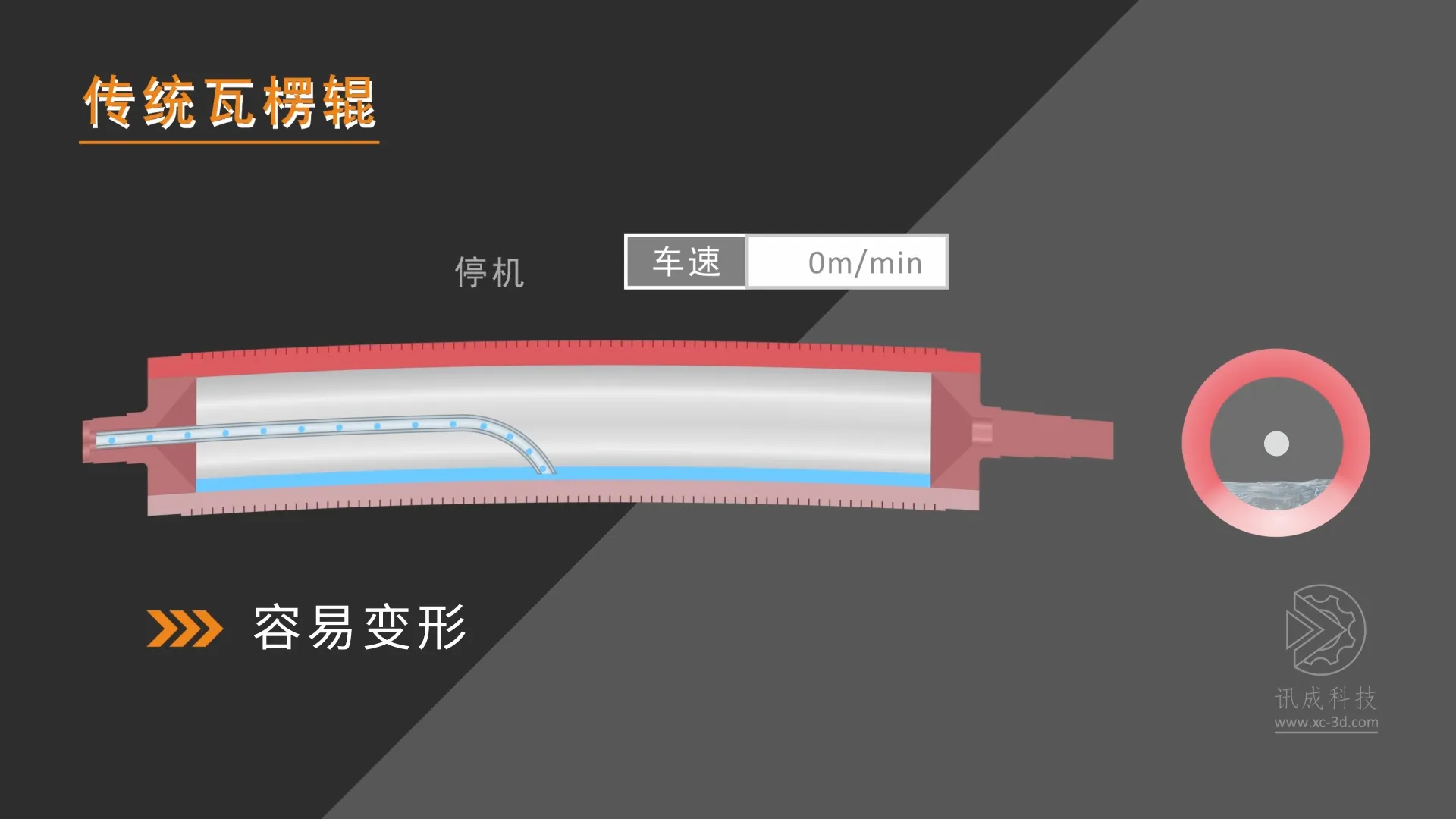
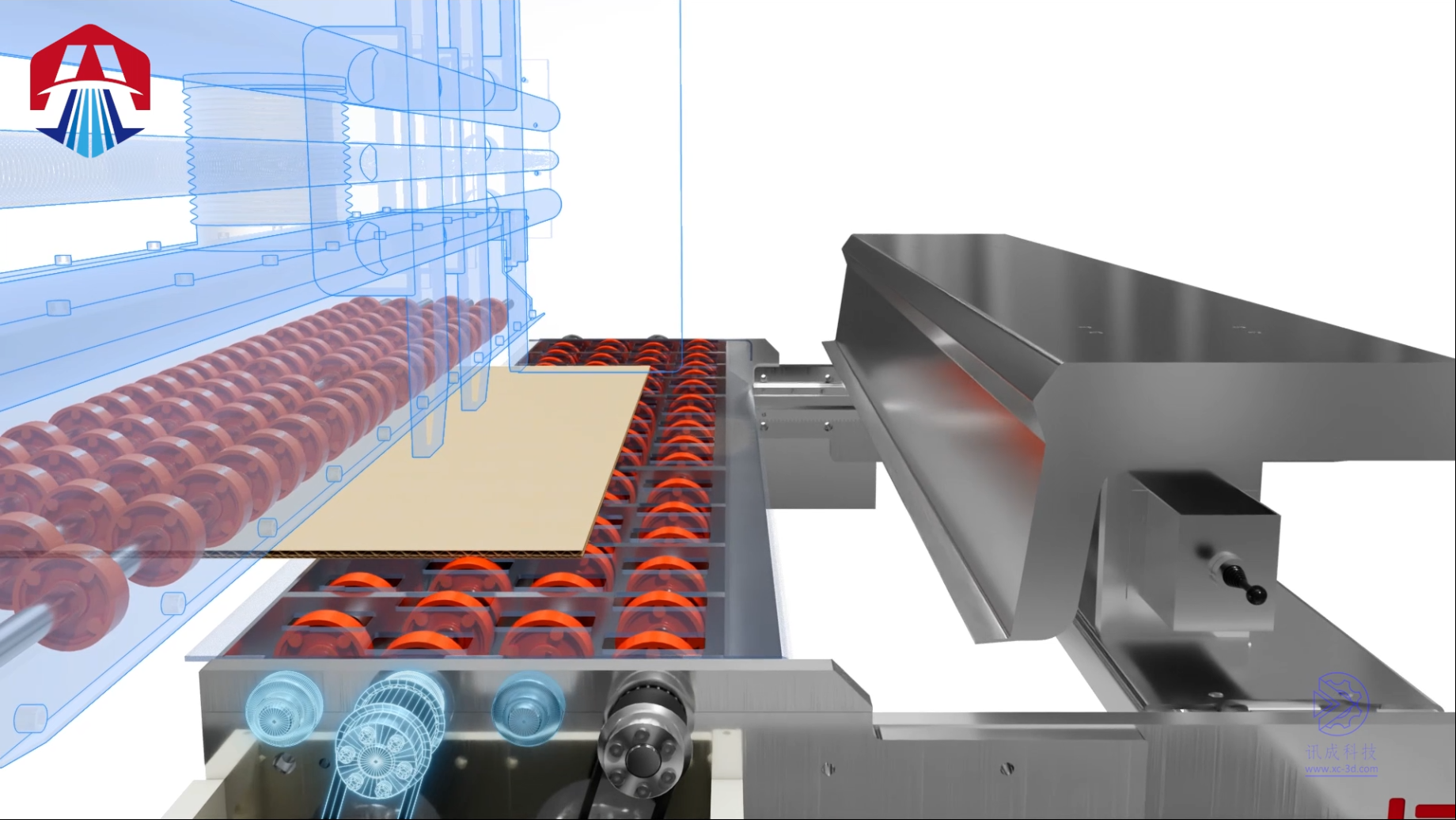
When promoting its peripheral heating corrugating roll, TIRUNA used a heat map comparison animation to demonstrate the difference in the roll body's temperature field between the traditional solution and the peripheral heating solution. The uneven heating caused by condensate buildup in the traditional solution, set against the stable temperature field created by the continuous, uniform flow of steam in the peripheral heating solution, formed a clear red-and-blue contrast on screen.
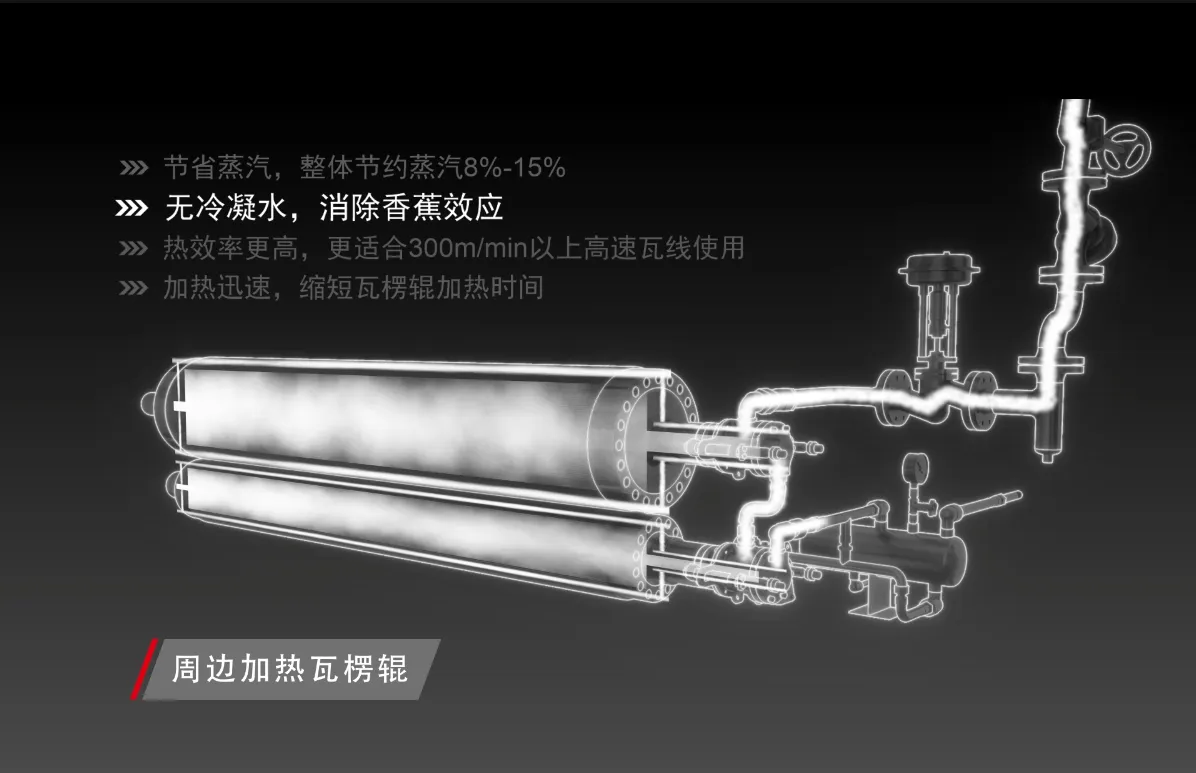
The customer doesn't need anyone to tell them "which solution is better"; they can see the difference for themselves on the screen. And when they see the difference with their own eyes, they also reach their own conclusion.
From "Let Me Think It Over" to "When Can It Be Installed"
Once a customer sees the real performance gap between the old and new equipment through a comparison animation, their decision-making path shifts. They no longer need a salesperson to persuade them, because they have already convinced themselves. Their question changes from "Let me think it over" to "When can it be installed?" This transformation stems from a simple fact: the difference they've witnessed has already exceeded the acceptable margin of error for continuing with the old equipment. They don't need someone to tell them it's time to switch; they've already made that decision on their own.
When a side-by-side comparison makes the gap impossible to ignore, the customer's acceptance of new equipment is no longer a process that requires repeated persuasion. They've seen the disparity for themselves and made their own judgment — from "Let me think it over" to "When can it be installed," the only thing standing between them is a comparison animation.
FAQ Highlights
Q: What types of equipment (products) are suitable for 3D animation videos?
A: Almost all equipment is suitable for 3D animation videos (complex machinery, electronic products, automotive products, architectural and real estate projects, medical products, FMCG). It is especially effective for the following three categories:
-
Promotion of new products and new models: When launching new products or new models into the market, a 3D animation video can showcase the product's highlights in the most direct and thorough way, reaching the hearts of customers and helping the sales team quickly open up the market.
-
Foreign trade sales: The foremost challenge in foreign trade sales is communication with overseas clients, particularly the translation and explanation of specialized terminology. A 3D animation video allows overseas clients to quickly grasp the equipment's highlights, paving the way for deeper discussions.
-
Key models highlighted at exhibitions: Every exhibition represents a significant investment in promotion for a company. Especially for large machinery or industrial products, a 3D animation demonstration not only showcases product highlights in an intuitive and vivid way, but also — for some less critical exhibitions — exhibitors can even choose not to bring the physical machinery or products, greatly saving on exhibition costs.
Q: What can 3D animation videos bring to a business?
A: Generally speaking, 3D animation videos fall into three categories: promotional 3D animations, technical 3D animations, and demonstrative 3D animations.
Promotional 3D animations:
Better demonstrate equipment highlights (e.g., reproducing product or equipment usage scenarios; using transparency or hiding irrelevant structures to highlight key components), enable faster dissemination (instantly reachable no matter the distance), reduce reliance on experienced sales personnel; stimulate purchase desire and boost product sales. At the same time, they can shape a professional image for the company, establish a high-end brand image, and carry out brand communication and promotion in a more vivid way, thus enhancing the corporate image.
Technical 3D animations:
Include six major categories: equipment operation, equipment maintenance, equipment repair, replacement of wear parts, equipment installation, equipment assembly, and equipment safety. They effectively reduce after-sales service pressure, especially during the warranty period; effectively increase customer stickiness; and have become a superior marketing method.
Demonstrative 3D animations:
Mainly used for:
-
New factory planning: Replacing traditional CAD drawings with 3D animation demonstrations for more intuitive and precise evaluation of new plant layouts.
-
Project bidding: Replacing traditional PPT presentations with 3D animations to facilitate review and understanding by client leaders, giving a competitive edge.
-
Achievement reporting: As important material for achievement declarations, using 3D animations instead of traditional PPTs to make approval easier.
-
Employee training: Making training content easier to understand and master, improving training efficiency and effectiveness, and reducing training costs.
Q: What does the client need to prepare for animation video production?
A: The client needs to prepare the following materials:
-
3D model of the product or equipment (primary)
-
Video narration script (can be used as voiceover)
-
Company logo and information (such as full company name, address, contact details, website, etc.)
-
Requirements and objectives (determine theme and style, budget and duration, sort out key content)
-
Others (such as video script copy, company-specific opening and closing sequences, etc.)
About Xuncheng Technology
Founded in 2016, with 9 years of professional experience in industrial 3D animation, our clients span a wide range of enterprises, including startups, overseas-oriented businesses, listed companies, and foreign-funded enterprises. We specialize in creating 3D animations for mechanical equipment, high-tech, software development, and foreign trade companies. From product sales to after-sales maintenance, we provide one-stop creative services for industrial 3D animation.
We have delivered nearly 3,000 minutes of professional animation videos for over 200 manufacturing enterprises.
Whether at exhibition sites or during client visits; whether expanding into overseas markets or enhancing after-sales service, we firmly believe that through the power of design, we can present complex products and machinery in stunning 3D animations. This not only brings a unique visual experience to our clients but also quickly wins over their hearts.