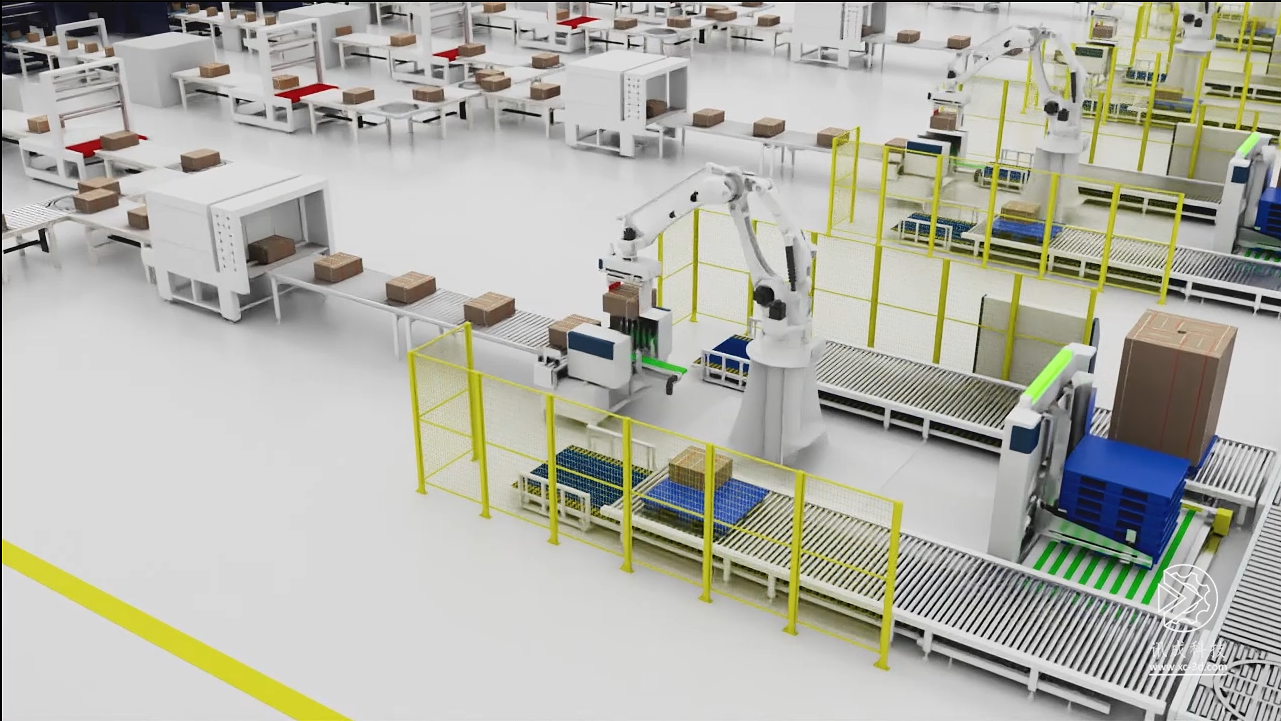
When producing industrial animations, one sensitive issue is unavoidable: the equipment’s 3D model is the carrier of its core technology. Handing that model over to an external team to create the animation means exposing the equipment’s internal structure, dimensional proportions, and mating relationships entirely to a third party. For companies that hold patented technologies, unique processes, or proprietary core structures, this risk is very real. Clients want the animation to be as transparent as possible, but the company cannot let its core secrets flow out along with the animation.
How can the value of the equipment be demonstrated clearly without revealing the core technology? This calls for a systematic desensitization strategy. It’s not about refusing to do it — it’s about holding something back while you do it.
Substitution: Replacing Exact Models with Logically Correct "Schematic Structures"
The core purpose of an equipment animation is to demonstrate working principles and operational logic, not to reveal the precise dimensions and machining parameters of every single part. In many cases, the client only needs to know that "this component is positioned here and moves according to this logic"—not "what the bore diameter of this component is down to the millimeter, or the fit tolerance down to a hundredth of a millimeter."
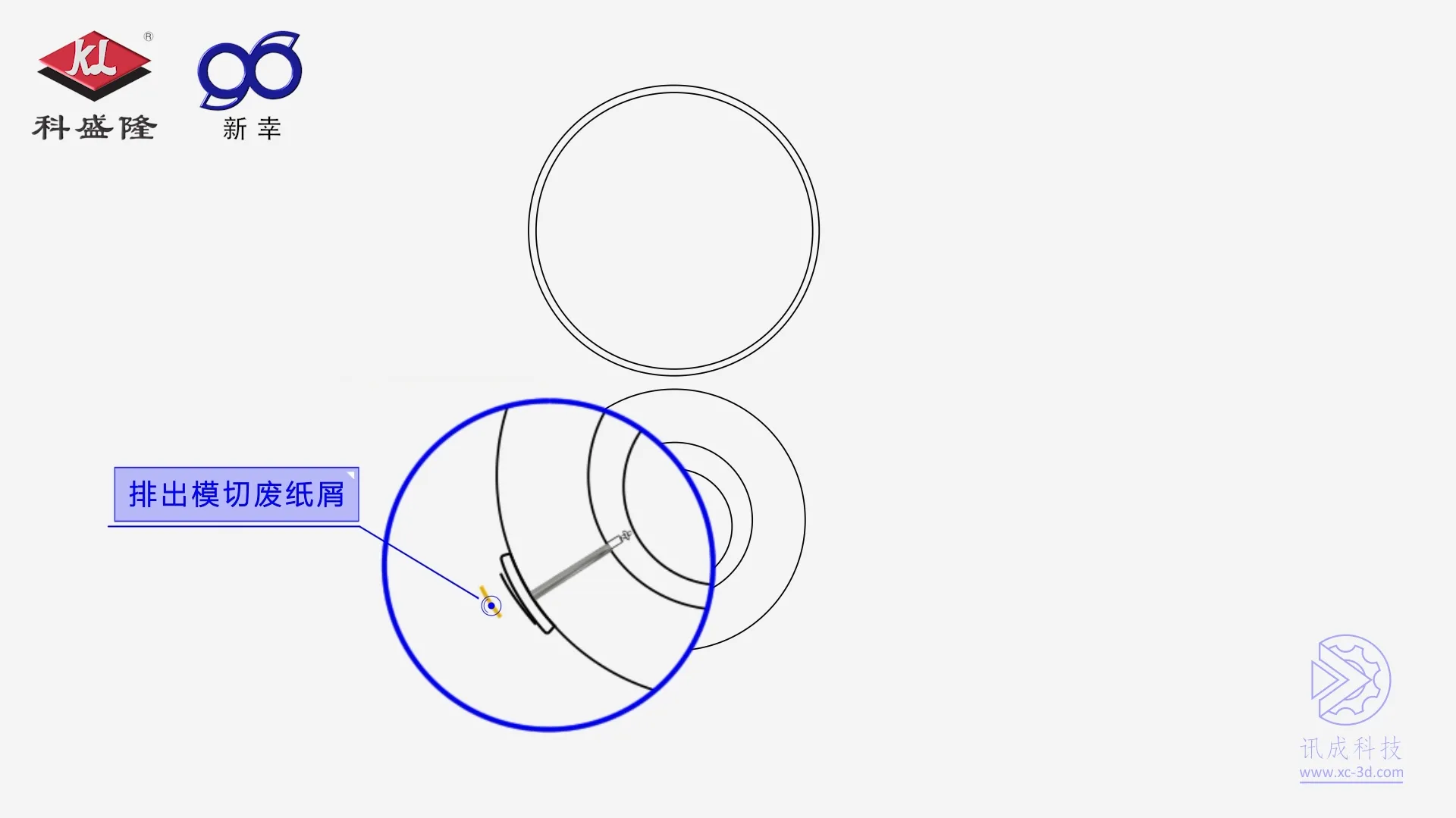
When Guangzhou Keshenglong Carton Packaging Machinery Co., Ltd. collaborated with Xiamen Xuncheng, the materials provided to the production team were very limited — only the housing model of the operator-side half, a few images, and a simplified PowerPoint presentation. Keshenglong did not hand over complete design drawings and precise models to the external team; instead, it provided schematic materials sufficient for understanding the working principles. Based on these materials, and drawing on their understanding of mechanical principles, the Xiamen Xuncheng production team completed the animated demonstration of complex functions such as the needle-type chip removal function and the conveyor belt system. What the client saw was an animation with flawless logic and accurate movements, yet the models behind the animation did not expose Keshenglong's core dimensional data.
The essence of this approach is: replacing "exact models" with "schematic structures." The gears in the animation can have the correct tooth ratio and relative positions, but they do not necessarily need to replicate the actual tooth profile and module; the pipelines in the animation can have the correct routing and connection relationships, but they do not necessarily need to replicate the actual pipe diameters and wall thicknesses. The logic is correct, the visuals are sufficient, and the core data remains securely inside the company.
Viewpoint Control: Only Showing "the Side the Client Is Supposed to See"
The visual language of an equipment animation can be precisely controlled. Which structures appear in the frame, from what angle, for how long, and whether they are cross-sectioned — all of this can be pre-determined during the planning stage. By limiting the viewpoint and the scope of what is shown, the core structure can be prevented from being fully exposed.
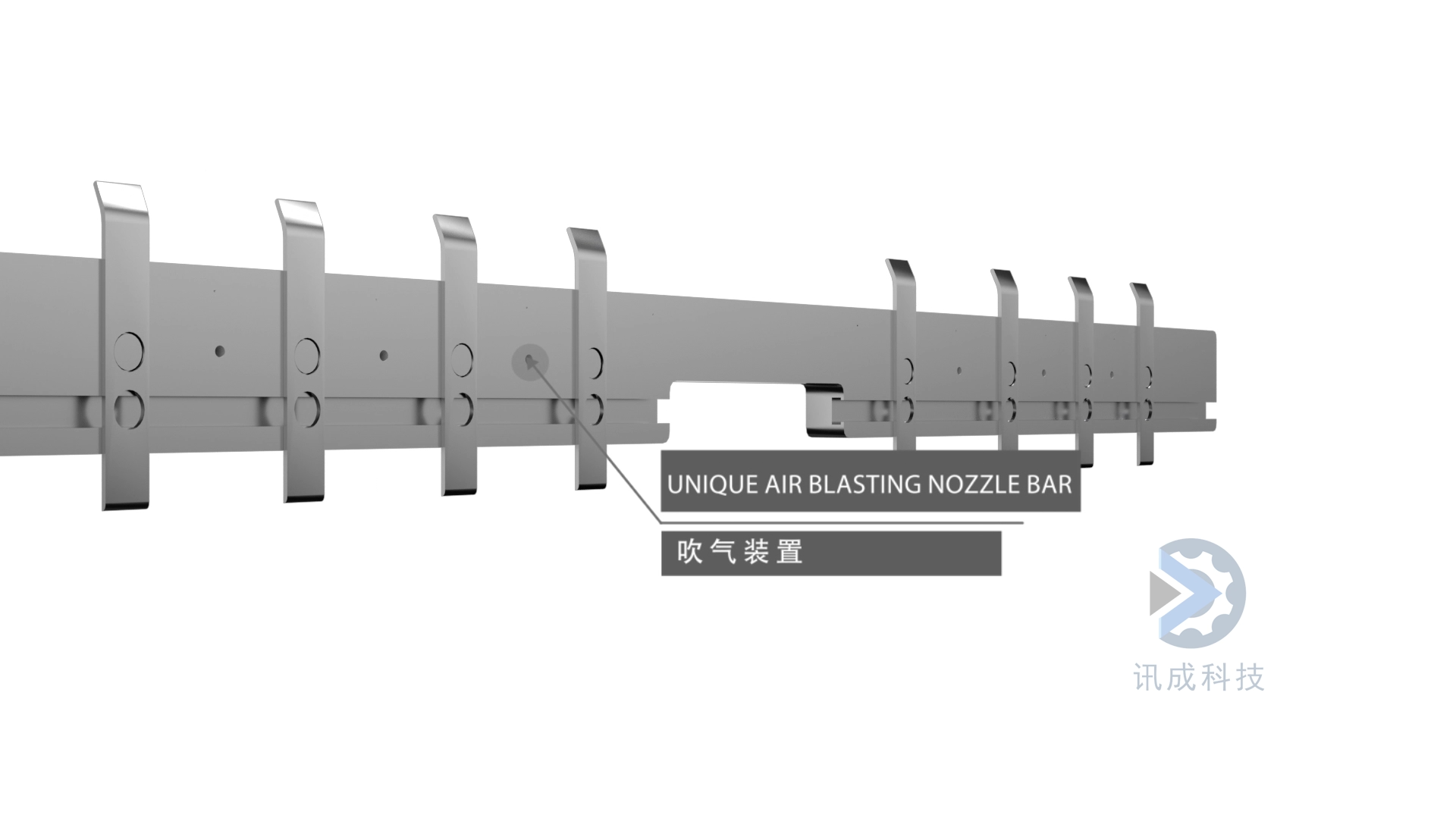
For the BRAUSSE 1050SDIH die-cutting machine animation by Shanghai Xuheng Precision Machinery Co., Ltd., when showcasing the air blowing device, the camera's entry angle and advancing path were meticulously designed. What appears on screen is the working effect and the approximate position of the air blowing device, yet the internal structure of the entire die-cutting unit is not fully exposed. The client sees exactly what they want to see — how that device works — while the other structures inside the die-cutting unit are not laid bare for all to see.
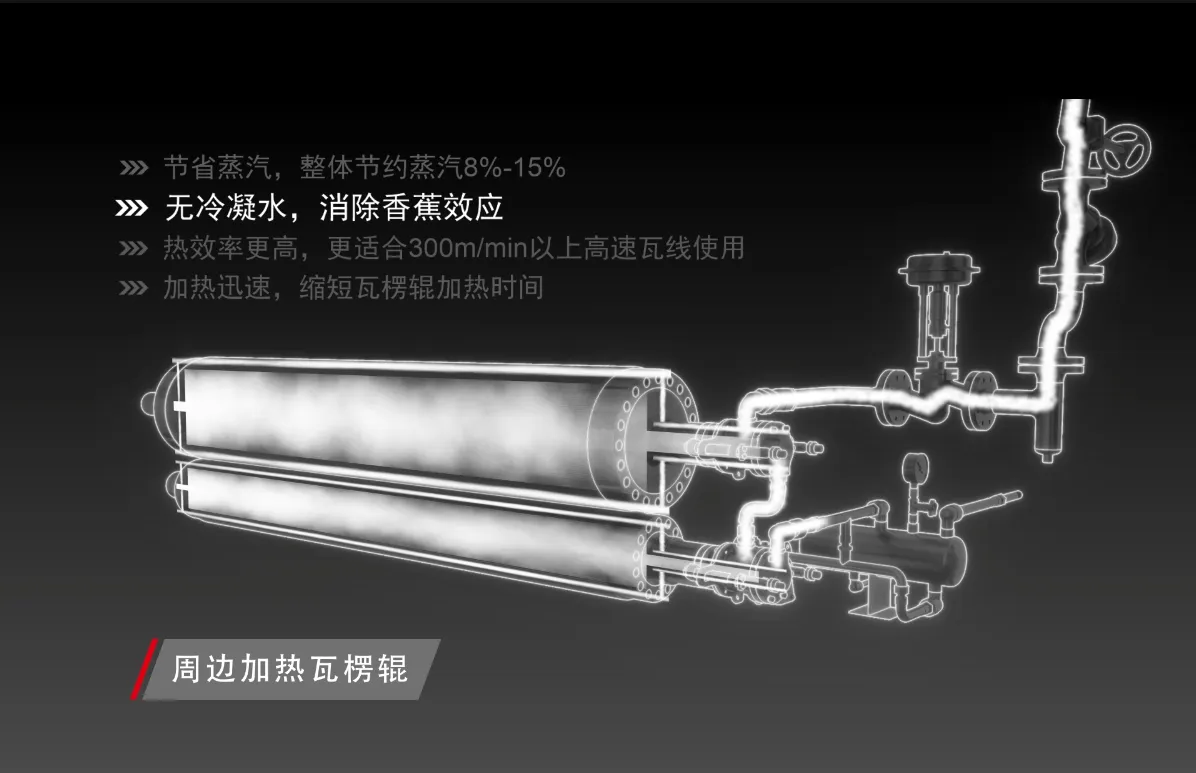
In the animation of TIRUNA’s peripheral heating corrugating roll, when demonstrating the internal thermal compensation structure, cutaway and see-through techniques were employed. However, the focus of the visuals was on the color changes in the heat map and the fluid flow paths — not on specific mechanical structural dimensions. What the client sees is "which areas the steam flows through and whether the temperature distribution is uniform," rather than "the precise cross-sectional area of the flow channels and machining parameters." Viewpoint control keeps the demonstration at the principle level, not the engineering level.
Obfuscation: Preserving Function, Concealing Parameters
For structures that genuinely need to appear in the animation, obfuscation can be used to reduce the risk of secrets leaking. For example, when showing the internal structure of a core component, its external shape and functional zones can be displayed without marking specific dimensions; when showing a critical fit, the logic of the fit can be demonstrated without revealing the exact fit clearance values.
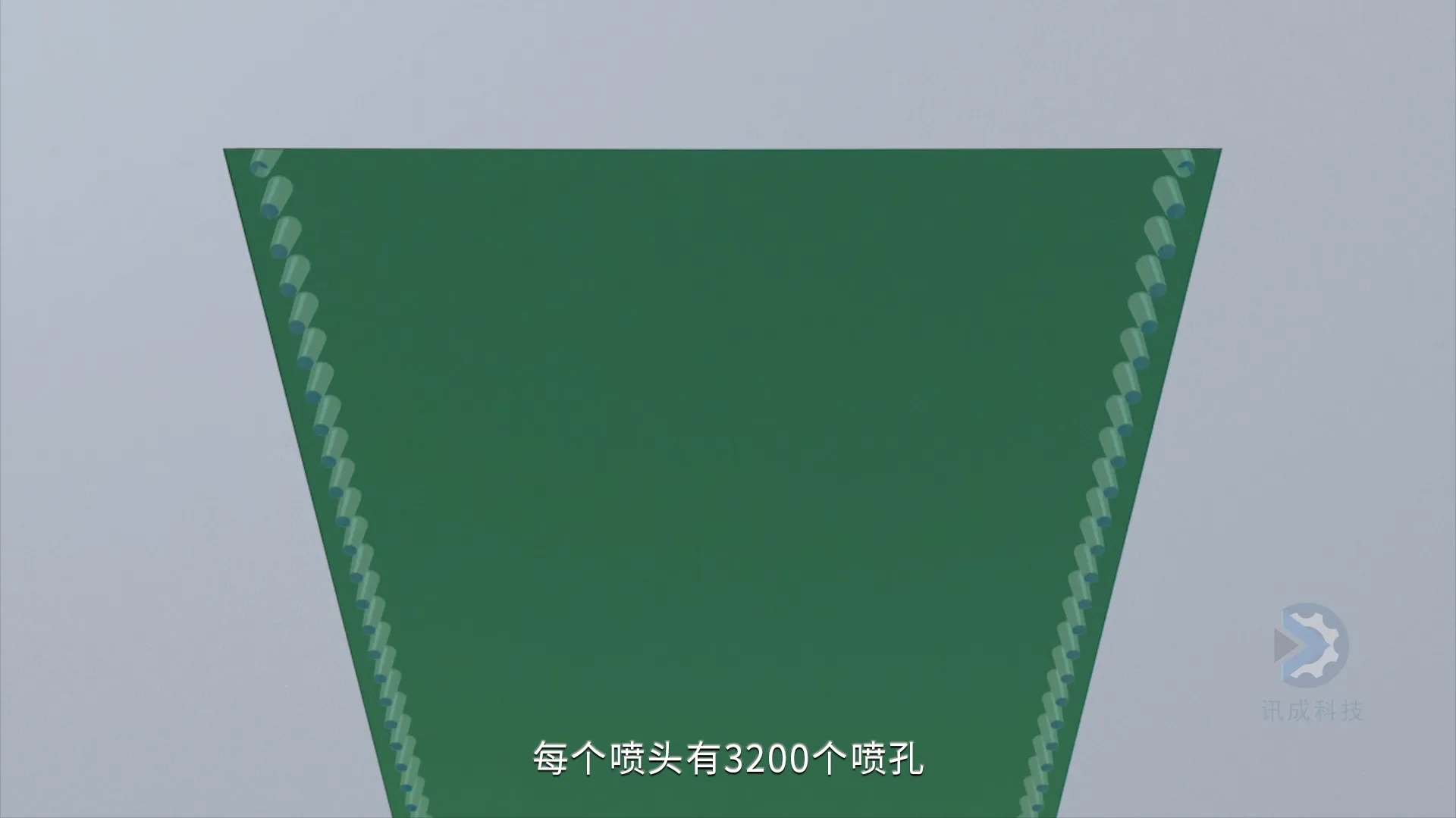
In the animation of the digital printing press printhead by WONDER, the structure of the micro-orifice inkjet cavity and the ink droplet ejection process were demonstrated. Yet the printhead’s core parameters — the precise aperture size, the specific driving voltage values, and the exact material composition — were completely absent from the animation. What the client sees is that "this printhead is highly sophisticated," not "what the parameters of this printhead are." The demonstration effect was achieved, and the core data was not leaked.
Layered Outsourcing: Handle Core Components In-House, Outsource Generic Structures
For some companies, core secrets are concentrated in just a few critical components, while the rest of the equipment consists of generic structures. In such cases, a layered outsourcing strategy can be adopted — generic structures are handed over to an external team for modeling and animation, while core components are processed in-house before being delivered for integration.
Experience from multiple projects by Xiamen Xuncheng shows that for many machines, the core secrets lie in a handful of modules such as the drive system, the control system, and the core processing unit, whereas parts like housings, frames, and conveyor systems are generic structures. A company can provide the production team with 3D data only for those generic parts, while supplying simplified schematic models or functional descriptions of the core modules. The production team then completes the animated presentation based on their understanding of the underlying principles. This approach ensures a complete visual demonstration while minimizing the risk of secrets leaking to the narrowest possible scope.
Creating an equipment animation does not mean you have to lay all your cards on the table. There is a viable path between protecting core secrets and demonstrating equipment value. Replacing exact models with schematic structures, restricting the scope of display through viewpoint control, concealing key parameters through obfuscation, and controlling the flow of core data through layered outsourcing — these methods can reduce the risk of leaks to a minimum without compromising the client’s understanding of the equipment’s value. What the client needs is to “understand why your equipment is excellent,” not to “take your data and make a copy.” Striking the right balance between demonstrating capability and exposing your inner workings is how you can truly “showcase without revealing.”
FAQ Highlights
Q: How can animation videos avoid exposing sensitive equipment structures?
A: Some clients worry that animation videos might reveal sensitive parts of a product. The following methods can address this:
-
When the client provides the product or equipment model, the sensitive structures can be deleted or deformed. (Model simplification and occlusion; blurring and fading; color adjustment and blending.)
-
When designing the animation shots, avoid showing the sensitive structural areas; instead, present them in a schematic manner.
-
Divide the animation video into a full version and a sales version. The sales version, which does not contain the sensitive parts, can be distributed externally; the full version is kept internal and only shown during presentations to clients.
Q: What types of equipment (products) are suitable for 3D animation videos?
A: Almost all equipment is suitable for 3D animation videos (complex machinery, electronic products, automotive products, architectural and real estate projects, medical products, FMCG). It is especially effective for the following three categories:
-
Promotion of new products and new models: When launching new products or new models into the market, a 3D animation video can showcase the product's highlights in the most direct and thorough way, reaching the hearts of customers and helping the sales team quickly open up the market.
-
Foreign trade sales: The foremost challenge in foreign trade sales is communication with overseas clients, particularly the translation and explanation of specialized terminology. A 3D animation video allows overseas clients to quickly grasp the equipment's highlights, paving the way for deeper discussions.
-
Key models highlighted at exhibitions: Every exhibition represents a significant investment in promotion for a company. Especially for large machinery or industrial products, a 3D animation demonstration not only showcases product highlights in an intuitive and vivid way, but also — for some less critical exhibitions — exhibitors can even choose not to bring the physical machinery or products, greatly saving on exhibition costs.
Q: In what settings can animation videos be distributed or shown?
A: Animation videos can be played in a variety of settings:
-
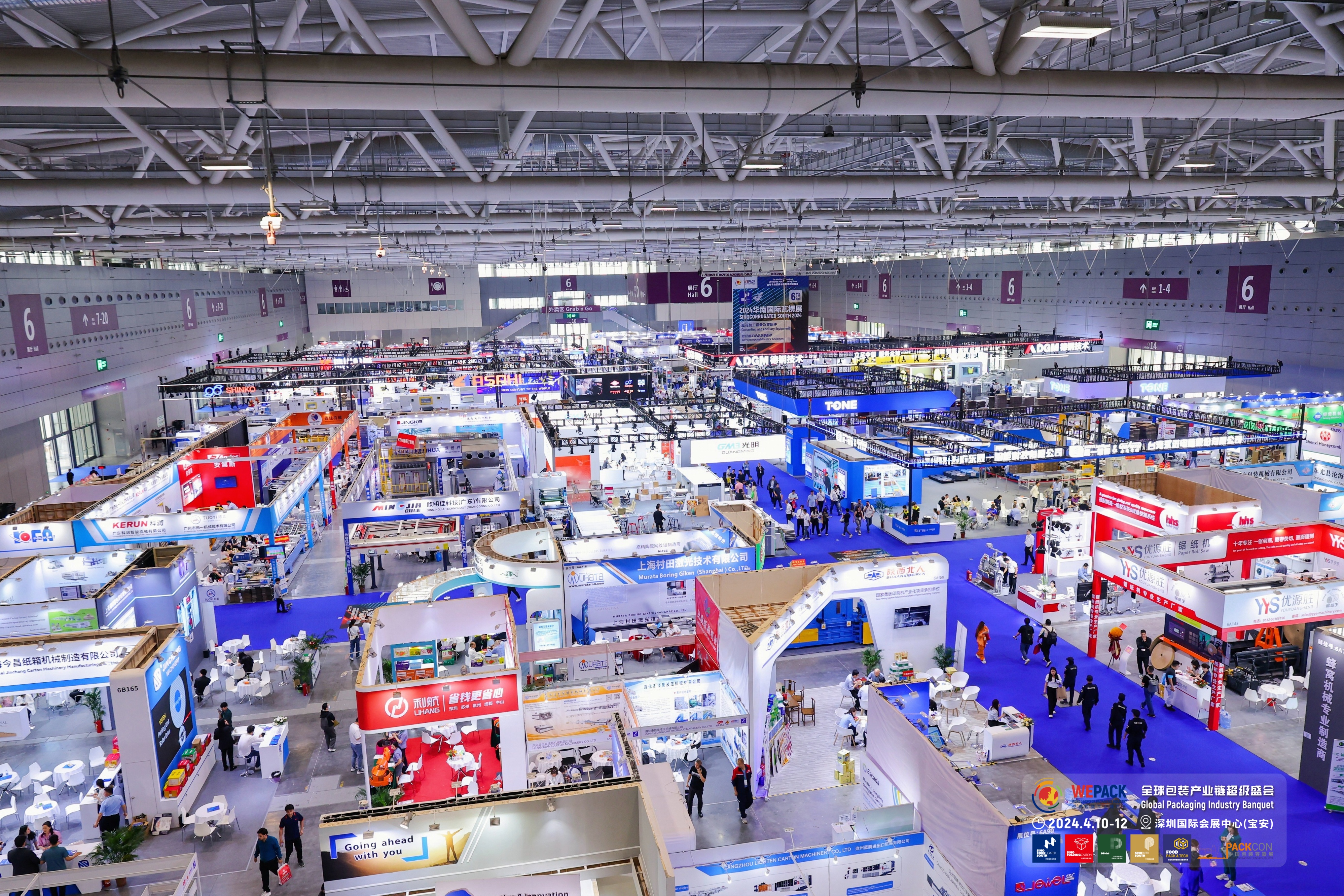
Exhibitions: Playing an animation video at an exhibition bustling with buyers can quickly capture clients' attention and facilitate in-depth conversations.
-
Client visits: It allows novice salespeople to get up to speed quickly. Even a new salesperson can engage in meaningful discussions with clients using the animation video.
-
Various platforms and official websites: Such as TikTok, WeChat Video Channel, Xiaohongshu, etc., to rapidly expand influence.
-
New factory planning: Moving beyond traditional CAD 2D demonstrations, using animation videos provides a more intuitive way to show whether the new factory layout is rational and well-planned.
-
After-sales service: Using animation videos to demonstrate equipment operation, maintenance, and repair is intuitive and easy to understand. It not only significantly reduces after-sales service costs but also helps increase customer stickiness.
-
Training and education settings: Animation videos are an important teaching tool, helping students and trainees understand and master knowledge more intuitively.
About Xuncheng Technology
Founded in 2016, with 9 years of professional experience in industrial 3D animation, our clients span a wide range of enterprises, including startups, overseas-oriented businesses, listed companies, and foreign-funded enterprises. We specialize in creating 3D animations for mechanical equipment, high-tech, software development, and foreign trade companies. From product sales to after-sales maintenance, we provide one-stop creative services for industrial 3D animation.
We have delivered nearly 3,000 minutes of professional animation videos for over 200 manufacturing enterprises.
Whether at exhibition sites or during client visits; whether expanding into overseas markets or enhancing after-sales service, we firmly believe that through the power of design, we can present complex products and machinery in stunning 3D animations. This not only brings a unique visual experience but also quickly wins over the hearts of their customers.