In the high-end equipment manufacturing sector, companies often face a critical strategic decision during product development and market promotion: how to showcase the core value of a product to potential clients with minimal cost and maximum efficiency when the equipment is not yet in production. Traditional methods relying on live-action shoots of physical prototypes, while seemingly intuitive and reliable, are fraught with significant financial risks and time costs. Industrial 3D animation technology, with its unique digital preview capabilities and flexible optimization features, is emerging as a more strategically farsighted choice for this scenario.
From a Cost Structure Perspective
Analyzing from a cost structure perspective, live-action shooting of unproduced equipment requires companies to invest substantial funds in manufacturing physical prototypes. This process involves multiple stages such as raw material procurement, precision machining, assembly, and debugging, each requiring significant capital outlay. More critically, if design modifications are needed after the prototype is manufactured, the company will face exorbitant modification costs and time losses. In contrast, industrial animation achieves almost zero-cost solution validation and display by building precise digital models in a virtual environment. This digital display method not only significantly reduces upfront investment costs but, more importantly, preserves ample flexibility for subsequent solution optimization.
It is estimated that the cost of adopting an animation display solution is only one-tenth of the cost of manufacturing a physical prototype, yet it achieves equivalent technical demonstration results, demonstrating a significant cost-effectiveness advantage.
On the Level of Risk Control
In terms of risk control, industrial animation demonstrates more prominent value. During the manufacturing of physical prototypes, design flaws are often discovered only during the testing phase after the prototype is completed. Modifications at this stage are not only costly but also severely impact product launch timelines. 3D animation technology, however, allows design teams to conduct unlimited virtual tests and solution optimizations during the design phase, enabling proactive identification and resolution of issues. This "virtual trial and error" mechanism allows companies to perfect their design solutions before investing in physical manufacturing, fundamentally reducing product development risks.
Time Efficiency Factor
Time efficiency is another key consideration. The manufacturing of physical prototypes typically takes several months, and any delay in any stage can affect the overall progress. The production cycle for industrial animation, on the other hand, can usually be controlled within a few weeks. This time advantage allows companies to gain a head start in market competition and commence market preheating and client communication earlier. Especially in time-sensitive scenarios like bidding or technical proposal reviews, animated demonstrations can help companies respond quickly to market opportunities and avoid missing business chances due to waiting for physical prototypes.
Display Effect
In terms of display effect, industrial animation overcomes many limitations of live-action shoots. Live-action is constrained by physical laws and shooting environments, making it difficult to showcase internal equipment structures, operating states under extreme conditions, or unfinished production scenes. 3D animation, however, can achieve comprehensive, multi-angle visual expression, even demonstrating special operating conditions and internal workings that live-action cannot capture. This groundbreaking display capability allows clients to understand product technical features and performance advantages more comprehensively and deeply.

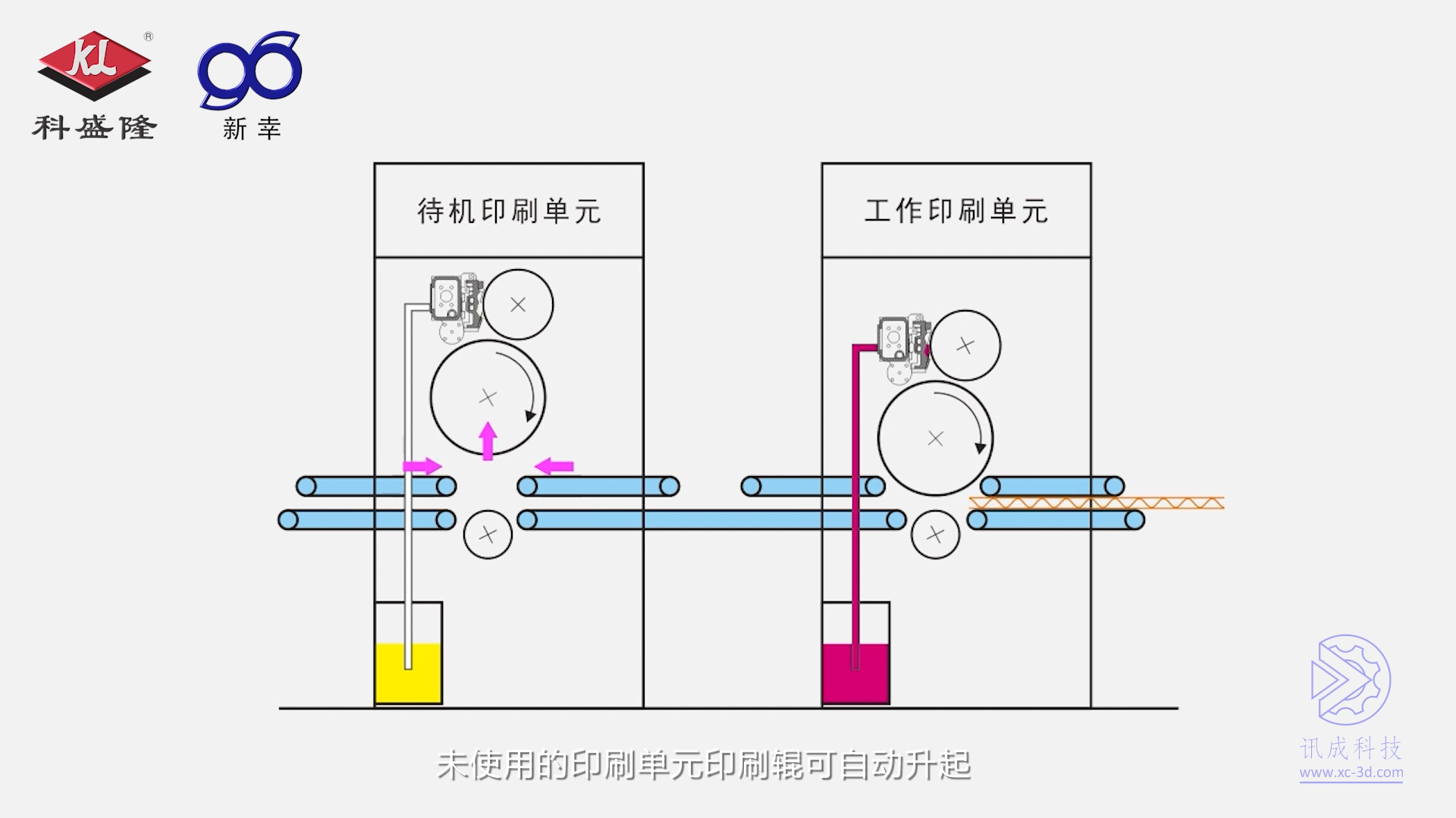
For instance, when demonstrating the continuous job change function of the Xinxing printing production line, facing shots difficult to capture with live-action, Xuncheng Technology's production team used 2D diagrams to illustrate the movement of the belt below as the printing roller of the printing unit rose. They further incorporated 3D animation, showing the equipment casing in perspective, to ensure the demonstration of the equipment's highlight features was intuitive and easy to understand.
Decision Support Value
For unproduced equipment, clients often struggle to form an accurate understanding based solely on drawings and technical parameters, which directly impacts decision-making efficiency and confidence. Industrial animation, by transforming abstract concepts into concrete visual experiences, significantly lowers the cognitive threshold and uncertainty in the decision-making process. When clients can virtually 'preview' the equipment's operation under actual working conditions through animation, their basis for decision shifts from abstract technical parameters to concrete value perception, thereby significantly enhancing the quality and efficiency of decisions.
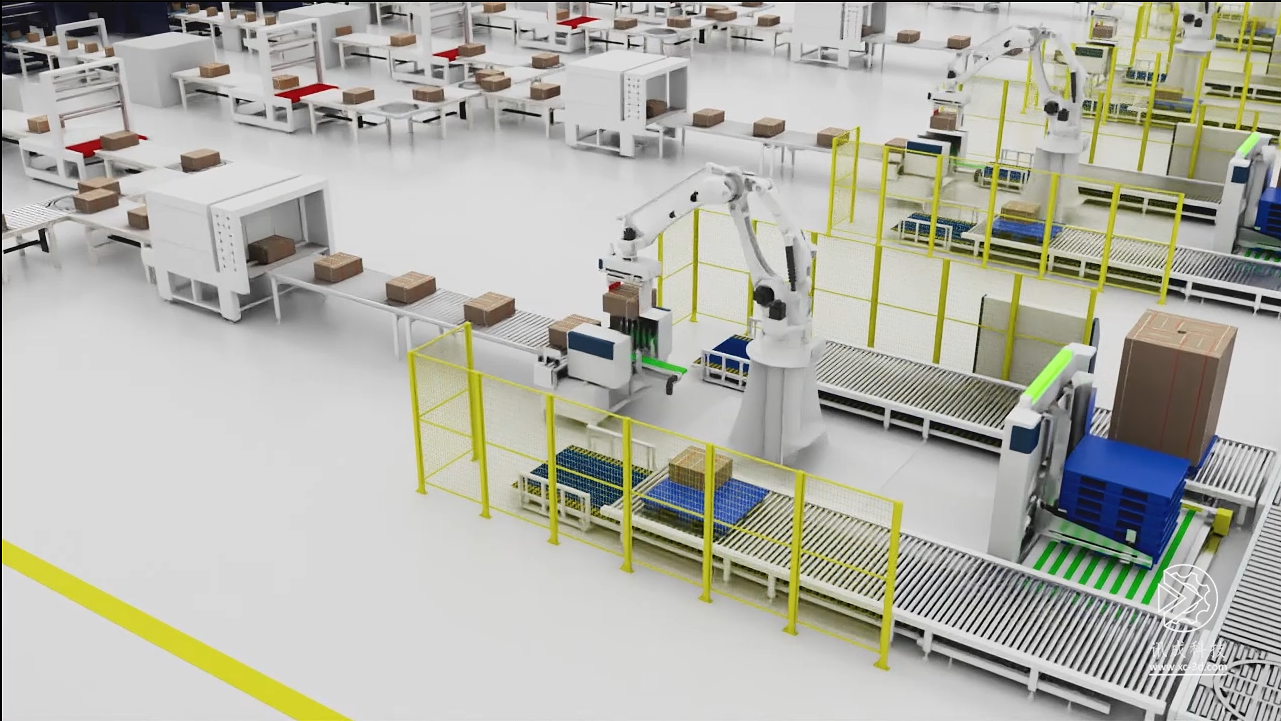
For example, in explaining complex factory designs, traditional CAD drawings often suffer from disorganized explanations and abstract, complex scenes. 3D animation, through concrete visuals, can greatly reduce the client's understanding cost. Oriental Hezhi's smart factory animation is a prime example. Under the design of the production team, the entire factory was clearly divided into areas such as the raw paper warehouse, cardboard buffer zone, carton production area, and finished product packaging area, with segmented explanations presented in an orderly fashion.
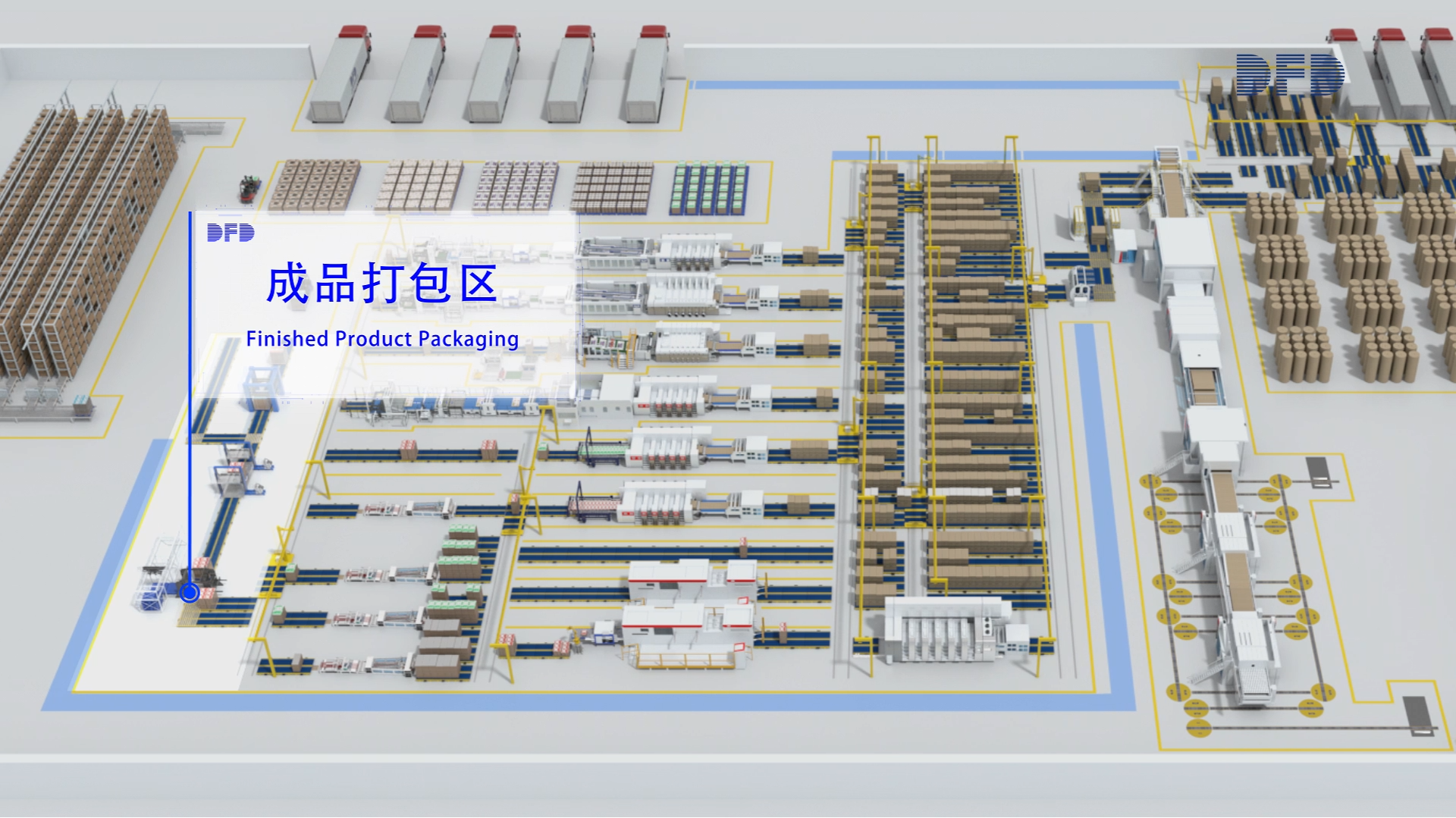
Furthermore, the digital assets of industrial animation have the characteristic of continuous value appreciation. Unlike physical prototypes whose value significantly depreciates after completing their display tasks, animation digital assets can continuously contribute throughout the product's entire lifecycle, being applied in employee training, after-sales service, product upgrades, and other aspects, thus maximizing value.
In today's rapidly changing market environment, companies need more agile and efficient product display and promotion methods. Industrial 3D animation, with its unique cost advantages, risk control capabilities, and display effects, offers equipment manufacturing enterprises a wiser path for technical demonstration. It not only significantly reduces companies' marketing costs and risks but also accelerates customer understanding and decision-making processes through precise visual expression. This digital-first display strategy allows companies to validate solutions and win markets before investing in physical manufacturing, truly achieving the strategic goals of minimizing risk and maximizing value.
Selected FAQs:
Q: What are the differences between industrial animation and live-action shoots?
A: Both industrial animation and live-action shoots can effectively showcase the highlights of industrial products. However, there are some differences:
1- Display Effect:
Live-action uses shots of the entire machine combined with close-ups to display product highlights, possessing realistic, natural textures and lighting effects, giving a strong sense of reality and presence. However, live-action may be affected by factors such as the shooting environment and lighting conditions, leading to some uncertainty in the visual outcome.
Industrial 3D animation offers richer demonstration techniques. In addition to live-action shots, it can employ methods like explosions, perspectives, cutaways, and microscopic zooms to demonstrate equipment highlights, achieving highly idealized and standardized visual effects. It can emphasize key points, clearly presenting desired information to the audience while avoiding potential interfering factors in live-action.
2- Professionalism:
Live-action is more commonly used for entertainment, culture, and lifestyle purposes; professional shooting of industrial equipment is a niche area. To effectively represent machinery, a certain level of professionalism is required, which is precisely what 3D animation production demands.
3- Production Cycle:
Live-action production process: Requirement -> Concept -> Script -> Pre-shoot Survey -> Rehearsal -> Shooting -> Post-production
Animation, in addition to the live-action process, includes 3D Modeling -> Materials -> Lighting -> Camera -> Animation -> Effects -> Post-production, resulting in a longer production cycle.
4- Cost:
Generally speaking, 3D animation production has higher requirements and offers superior results, thus incurring higher production costs.
3D animation has high upfront investment costs, but lower costs for subsequent repeated display and dissemination.
Live-action has simpler initial preparation, but is influenced by factors like weather, location, and actors. If extensive duplication and dissemination are required, master tape production costs need to be considered.
5- Content Representation:
The content presented in live-action must be real or realistically achievable in reality, generally based on real scenes and situations, focusing more on recording and displaying real people, environments, and events.
3D animation is not limited by real-world physical conditions or space, allowing for easy demonstration of content that is difficult or impossible to achieve in reality (such as complex internal structures of industrial products, chemical reaction processes in the microscopic world, virtual assembly processes of large machinery, etc.), and can also provide visual representations of abstract concepts or data.
Q: Are animated videos expensive?
A: The price of animated videos varies significantly, mainly influenced by production difficulty, duration, creative style, production cycle, and service content. On the surface, animated videos are not cheap, with prices often ranging from tens of thousands to hundreds of thousands, or even millions. However, for high-end promotional videos of industrial products and machinery, animated videos offer excellent cost-effectiveness.
1- Replaces traditional paper brochures, is intuitive and easy to understand, spreads quickly, and reduces reliance on experienced sales personnel.
2- Animated videos have high quality, perfectly showcasing many details, unique functions, and structures, facilitating deeper communication with clients.
3- Animated videos can be produced in interactive modes, increasing customer engagement.
Q: What does the client need to prepare for animated video production?
A: The client needs to prepare the following materials for animated video production:
1- 3D models of the product or equipment (primary)
2- Video script (can be used for voiceover)
3- Company LOGO and company information (e.g., full company name, address, contact details, website, etc.)
4- Requirements and objectives (determine theme and style, budget and duration, outline key content)
5- Others (e.g., video storyboard, proprietary company intro/outro, etc.)
About Xuncheng Technology
Founded in 2016, with 9 years of professional industrial 3D animation creation experience, our clients span various types of enterprises including startups, overseas lead generation, listed companies, and foreign-invested enterprises. We specialize in providing 3D animation creation services for machinery and equipment, high-tech industries, software development, and foreign trade companies. We offer one-stop industrial 3D animation creative services from product sales to after-sales maintenance.
We have provided nearly 3000 minutes of professional animated videos for over 200 manufacturing enterprises.
Whether at exhibition sites or client visits; whether expanding into overseas markets or improving after-sales service, we firmly believe that through the power of design, complex products and machinery can be presented in stunning 3D animation. This not only brings a unique visual experience to clients but also quickly touches their hearts.